 ultimate-guide
Roof Maintenance Services: A Complete Homeowner's Guide
Table of Contents
- What Roof Maintenance Services Actually Include
- Your Seasonal Roof Maintenance Checklist
- Roof Repair vs. Replacement: Knowing When Maintenance Is Not Enough
- Maintenance vs. Repair vs. Replacement: A Side-by-Side Comparison
- Seasonal Maintenance Schedule for Western Oregon and Southwest Washington
- What Affects Roof Moss Removal Cost and Overall Maintenance Pricing
- Preventative Roof Care: Getting the Most from an Existing Roof
- Frequently Asked Questions
Last Updated: September 16, 2026
What Roof Maintenance Services Actually Include
Roof maintenance services combine a limited visual review within the agreed service scope with preventative work intended to help a serviceable roof remain clean, drain properly, and reduce conditions that may contribute to premature deterioration. Maintenance does not make a roof permanently leak-free or restore materials that have already reached the end of their useful life.
At Apex Contracting, we approach roof maintenance as routine property care: review accessible areas within the agreed service scope, address appropriate preventative items, document visible concerns, and help the homeowner plan for repairs or replacement when maintenance is no longer sufficient.
The exact scope should be defined before work begins. Depending on the roof and selected service, a maintenance visit may include:
- Reviewing visible and accessible roof surfaces, valleys, edges, flashings, and penetrations within the agreed service scope
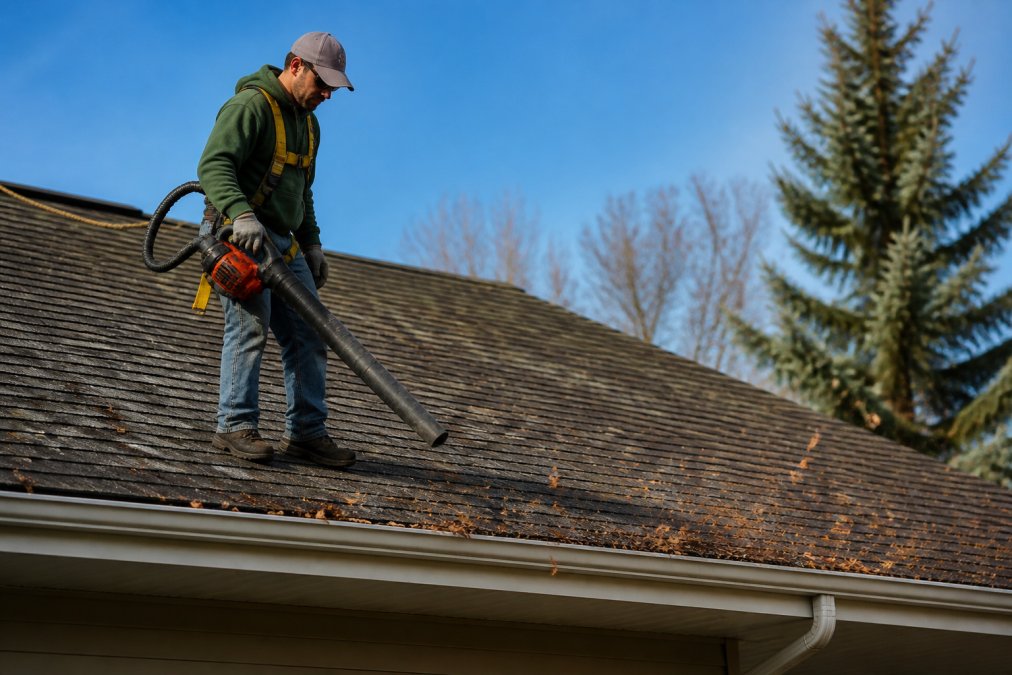
- Removing loose leaves, needles, branches, and other debris
- Cleaning gutters and confirming that accessible downspouts are draining
- Identifying moss, algae, staining, and areas that remain damp
- Applying an appropriate moss treatment when included
- Evaluating exposed or backed-out fasteners and deteriorated sealant
- Completing limited minor corrections when specifically included and appropriate
- Documenting damaged, missing, loose, or severely deteriorated materials
- Evaluating roofline vegetation and recommending trimming where needed
Significant repairs, heavy moss removal, specialized leak investigation, and major tree work may require a separate scope. Large or hazardous limbs should be handled by a qualified tree-service provider.
Debris Removal and Gutter Care
Leaves, needles, branches, and roofing granules can collect in valleys, behind chimneys, at roof-to-wall intersections, and inside gutters. Accumulated material slows drainage, retains moisture, and can conceal damaged roofing or flashing.
Clogged gutters commonly overflow against the fascia and soffit or discharge water near siding, walkways, landscaping, and the foundation. Clearing the gutters and checking accessible downspouts helps restore drainage and makes it easier to identify loose components, failing seams, or areas where water is not flowing as intended.
Gutter cleaning does not correct every drainage problem. Improper gutter slope, undersized systems, damaged components, poorly placed outlets, and inadequate ground drainage may require additional work.
Moss Treatment and Gentle Roof Cleaning
Moss can retain moisture and collect debris against a roof surface. As established growth thickens, it may interfere with drainage and work beneath or around the edges of asphalt shingles.
Asphalt shingles should not be cleaned with aggressive pressure washing. High-pressure spray and forceful scrubbing can loosen protective granules, disturb shingle edges, and drive water into vulnerable areas.
A more conservative approach uses a roof-appropriate treatment applied according to its label and the roofing manufacturer’s guidance. The treated growth may loosen and release gradually through weathering. When physical removal is appropriate, it should be performed carefully to avoid unnecessary damage to the roofing surface.
The correct method depends on the roofing material, its condition, the extent of the growth, surrounding landscaping, and the products approved for that application.
Your Seasonal Roof Maintenance Checklist
A repeatable roof-maintenance checklist helps homeowners notice changes before they become larger problems. Review the roof from the ground, an upper-story window, and accessible interior areas in spring and fall, as well as after significant wind or storm activity. Taking dated photographs from the same locations can make gradual changes easier to recognize.
This checklist is intended for basic homeowner observation. It is not a formal roof inspection, leak diagnosis, or structural assessment, and homeowners should not climb onto a roof to complete it.
The Core Checklist
- Look for missing, shifted, cracked, curled, or visibly damaged roofing
- Watch for unusual amounts of granules collecting in gutters or near downspout outlets
- Look for visibly loose, lifted, or damaged flashing around chimneys, vents, skylights, and roof-to-wall intersections
- Confirm that gutters are not overflowing and that downspouts discharge as intended
- Look for exposed, raised, or backed-out fasteners
- Note moss, algae, lichen, dark staining, or areas that remain damp
- Keep branches from contacting or scraping the roof, and have hazardous limbs handled by a qualified tree-service provider
- Check ceilings and accessible attic areas for staining, damp materials, or changes following heavy rain
- Look for sagging gutters, damaged fascia, loose roof-edge components, or debris collecting in valleys
- Record anything that has changed since the previous seasonal check
What to Look For by Roof Material
Different roofing materials age in different ways, so the most useful maintenance observations depend on the roof type.
Roof material | Common concerns | Areas to observe | Maintenance considerations |
|---|---|---|---|
Asphalt shingles | Granule loss, curling, cracking, missing shingles, moss and exposed fasteners | Valleys, shaded slopes, roof edges, penetrations and areas beneath overhanging trees | Avoid pressure washing and aggressive scrubbing; use roofing-compatible treatment methods |
Metal roofing | Loose or backed-out fasteners, deteriorated washers, damaged coatings and failed sealant | Panel seams, fastener rows, penetrations, transitions and roof edges | Fasteners and sealants should be corrected using compatible components without over-tightening |
Clay or concrete tile | Cracked, broken or displaced tiles and debris in drainage channels | Tile field, ridges, hips, valleys and penetrations | Tiles may remain serviceable while concealed underlayment ages; avoid walking on tile without proper training |
Wood shake or shingle | Splitting, curling, decay, moss and restricted drainage between courses | Shaded areas, exposed sunny slopes, butt ends, valleys and areas beneath vegetation | Avoid aggressive cleaning; maintain airflow and drainage while following material-specific guidance |
Composite or synthetic roofing | Cracking, movement, surface wear and sealant deterioration | Seams, flashings, penetrations, edges and transitions | Follow the manufacturer’s cleaning, repair and maintenance instructions |
If the roofing material cannot be identified safely from the ground, do not climb onto the roof to investigate. Apex Contracting can document visible maintenance concerns encountered during an agreed service visit, but a formal roof inspection, structural assessment, or specialized leak diagnosis may require an appropriately qualified provider.
When Roof Damage May Warrant Contacting Your Insurer
Routine maintenance concerns and sudden roof damage should be handled differently. Moss growth, clogged gutters, gradual deterioration, and age-related granule loss are generally maintenance or wear concerns rather than sudden losses. Damage associated with wind, falling objects, fire, or another specific event may warrant contacting your insurance company.
Coverage varies by policy, cause of loss, exclusions, roof condition, deductible, and other circumstances. A contractor can document visible damage and prepare a repair estimate, but cannot determine whether an insurance policy covers the loss.
If you discover possible storm or impact damage:
- Photograph or record the visible conditions from a safe location
- Note when the damage or related event was first discovered
- Contact your insurance company or agent promptly for instructions
- Take reasonable temporary measures to prevent additional damage when it is safe to do so
- Keep receipts, photographs, estimates, and communications related to the loss
- Avoid non-emergency permanent repairs until the insurer has had an opportunity to review the damage, unless delaying the work would create an immediate safety concern or allow additional damage
Maintenance records and dated photographs may help document the roof’s prior condition and the care it received, but they do not guarantee coverage or claim approval.
Be cautious when anyone states that damage is “definitely covered” or “definitely not covered.” The insurer interprets the policy and makes the coverage decision. Questions or disputes about coverage should be directed to the insurance company, a licensed insurance professional, or the appropriate state insurance regulator.
A seasonal maintenance checklist is not a storm-damage assessment or formal roof inspection. Apex Contracting can document visible maintenance or repair conditions encountered within an agreed service scope, but we do not determine insurance coverage or represent the homeowner during the claim process.
Roof Repair vs. Replacement: Knowing When Maintenance Is Not Enough
Maintenance can help preserve a serviceable roof, but it cannot reverse widespread deterioration, correct structural movement, or restore roofing materials that have reached the end of their useful life.
A repair is generally most appropriate when damage is isolated and the surrounding roofing remains serviceable. Replacement may deserve consideration when deterioration is widespread, several areas are failing, or repeated repairs no longer provide a practical solution.
Conditions that may indicate maintenance alone is no longer sufficient include:
- Missing, cracked, curled, or severely deteriorated shingles across multiple areas
- Widespread granule loss, exposed asphalt, or visible shingle mat
- Repeated leaks or repairs in different areas over a relatively short period
- Interior staining or moisture that returns after the original source was addressed
- Large sections of deteriorated flashing or failing roof-edge components
- Soft, damaged, or deteriorated roof decking discovered during authorized work
- A visibly sagging or uneven roofline
- Roofing materials that are no longer holding repairs reliably
These conditions do not automatically mean that replacement is required. The roof’s material, age, installation, number of existing layers, damage pattern, underlying components, and repair history all affect the appropriate recommendation.
An isolated missing shingle or localized flashing defect may still be repairable. Conversely, repeatedly repairing individual symptoms on a broadly deteriorated roof may cost more without addressing the overall condition.
Maintenance vs. Repair vs. Replacement: A Side-by-Side Comparison
Roof maintenance, repair, and replacement serve different purposes. Choosing between them depends on the location and extent of the problem, the surrounding roof condition, the roofing material, and whether previous repairs are continuing to perform.
Service | Primary purpose | When it may be appropriate | Typical scope |
|---|---|---|---|
Maintenance | Manage routine conditions and reduce preventable deterioration | The roofing remains serviceable and does not show widespread failure | Debris removal, gutter care, moss treatment, gentle cleaning, condition documentation, and limited fastener or sealant maintenance when included |
Repair | Correct an identified, localized defect or damaged area | The problem is isolated and the surrounding roofing can still support a reliable repair | Replacing damaged shingles or components, correcting localized flashing defects, addressing exposed fasteners, or repairing a defined section |
Replacement | Replace a roofing system that can no longer be maintained or repaired practically | Deterioration is widespread, several areas are failing, materials no longer hold repairs, or replacement is otherwise the most reasonable option | Removal or preparation of existing materials as permitted, correction of identified substrate issues, and installation of the new roofing system and related components |
A leak does not automatically determine which category applies. Water can travel from its entry point, and interior moisture can also originate from plumbing, ventilation, condensation, siding, windows, or other building components. The source should be appropriately evaluated before a repair scope is finalized.
An Apex Contracting HomeCare maintenance plan can help manage recurring roof, gutter, and exterior-maintenance needs while creating a consistent service record. Maintenance cannot reverse severe deterioration or return a failing roof to new condition, but it can help homeowners identify changing conditions and plan upcoming work more deliberately.
Seasonal Maintenance Schedule for Western Oregon and Southwest Washington
Western Oregon and southwest Washington experience prolonged wet weather, wind, moss growth, and seasonal debris. Roof maintenance should therefore focus on keeping drainage paths open, managing organic growth, documenting visible changes, and completing appropriate work during suitable weather conditions.
The schedule below is a general framework. The roofing material, surrounding trees, roof pitch, drainage design, exposure, and product instructions may require a different service frequency.
Season | Suggested focus | Why it matters |
|---|---|---|
Spring | Review visible conditions after winter, remove accumulated debris, check gutters and downspouts, and evaluate moss growth | Winter weather can leave branches, needles, sediment, loose components, and developing organic growth |
Summer | Complete suitable repairs, fastener or sealant work, conservative cleaning, and asphalt-shingle roof rejuvenation when the roof is a suitable candidate. | Longer dry periods may provide better conditions for roofing materials, sealants, treatments, and application work |
Fall | Remove leaves and roof debris, clean gutters, confirm downspout discharge, and address vegetation contacting the roof | Preparing drainage before prolonged rain helps reduce overflow and moisture-related problems |
Winter | Observe drainage during rain, check ceilings and accessible attic areas for changes, and document visible storm damage from a safe location | Early awareness allows temporary protection or repair planning before additional damage develops |
Fall is often an important maintenance period, particularly for homes surrounded by deciduous trees. However, a heavily wooded property may require more than one gutter or debris-removal visit during the season.
Moss treatments, sealants, coatings, and rejuvenation products should be applied only when weather conditions satisfy the product label and manufacturer requirements. Large, hazardous, or difficult-to-reach branches should be handled by a qualified tree-service provider.
Homeowners should perform winter observations from the ground, inside the home, or from another safe location. Do not climb onto a wet, icy, storm-damaged, or visibly deteriorated roof.
What Affects Roof Moss Removal Cost and Overall Maintenance Pricing
Roof moss treatment, debris removal, and preventative-maintenance pricing varies with the roof and the requested scope. Some providers use starting prices or service tiers, but an accurate written estimate generally requires enough information to understand the roof’s size, access, material, condition, and level of buildup.
Factors that can affect pricing include:
- Roof surface area, layout, and number of sections
- Pitch, height, and whether the working areas are safely accessible
- Number of stories and access around the building
- Roofing material and its current condition
- Amount, thickness, and location of moss or other organic growth
- Leaves, branches, needles, and debris accumulated on the roof
- Gutter and downspout conditions when those services are included
- Landscaping, siding, solar panels, and other areas requiring protection
- Required safety equipment and fall-protection measures
- Whether the scope involves treatment alone, conservative physical removal, follow-up service, or additional maintenance
- Minor repair or fastener work authorized separately from cleaning
A small, low-slope roof with light growth and clear access requires a different amount of labor and preparation than a steep, multi-level roof with heavy moss, accumulated debris, and obstructed gutters.
Apex Contracting prepares pricing based on the requested service and visible project conditions rather than presenting one figure as appropriate for every property. The written estimate should identify what is included, what is excluded, and whether the expected result requires more than one visit.
Preventative Roof Care: Getting the Most from an Existing Roof
Preventative roof care addresses manageable conditions before they contribute to larger problems. It cannot ensure that every issue will be discovered or prevent every future repair, but it can help control debris, drainage problems, organic growth, and other conditions that may contribute to deterioration.
The relationship is not always a simple chain of cause and effect. Debris can retain moisture and obstruct drainage. Shaded, damp areas may support moss growth. Established moss can collect additional debris and interfere with roofing surfaces. If water reaches damaged roofing, deteriorated flashing, or vulnerable underlying components, additional damage may develop.
Regular maintenance reduces some of these avoidable conditions, but the appropriate work depends on the roofing system and its existing condition.
How Maintenance Needs Differ by Roof Material
- Asphalt shingles: Maintenance commonly focuses on debris removal, gutter care, conservative moss treatment, damaged or missing shingles, flashings, and exposed fasteners. Exposed or backed-out fasteners should be evaluated and corrected appropriately rather than automatically covered with sealant. Field-applied rejuvenation products require additional consideration because compatibility, manufacturer recommendations, existing warranties, product limitations, and local requirements may vary. No specific increase in service life should be guaranteed.
- Metal roofing: Maintenance may involve clearing debris, checking drainage paths, observing panel seams, coatings, fasteners, washers, penetrations, and sealant conditions. Fasteners should not simply be tightened on a schedule; over-tightening can damage washers or panels. Corrections should use components and methods compatible with the specific roof system.
- Clay and concrete tile: Maintenance generally focuses on displaced or broken tiles, open drainage channels, valleys, ridges, flashings, and vegetation. Tile may remain intact while concealed underlayment continues to age. Walking on tile can also cause additional breakage and should be avoided without appropriate training and access methods.
- Wood shake and shingle: Maintenance should preserve drainage and airflow between courses while addressing debris, vegetation, moss, splitting, and decay. Aggressive pressure washing or scraping can damage the wood, so cleaning and treatment should follow material-specific guidance.
- Composite and synthetic roofing: These products vary significantly by manufacturer. Cleaning, treatment, sealant, and repair decisions should follow the instructions for the identified roofing product.
If the roof material, manufacturer, or approximate installation date is unknown, review available property records, permits, invoices, warranties, and product markings before selecting treatments that could affect the roofing system.
Roof Maintenance, Energy Performance, and Solar Panels
Routine roof maintenance should not be promoted as a direct energy-efficiency upgrade. Insulation, attic air sealing, ventilation, roof color, solar reflectance, and the overall building assembly generally have a greater effect on energy performance than debris or moss removal alone.
Homes with solar panels may require additional planning. Leaves and debris can collect around or beneath an array, access may be limited, and roofing work could affect wiring, mounting hardware, or panel warranties. Solar equipment should not be disconnected, moved, or altered except by an appropriately qualified provider. If panels obstruct necessary roofing work, coordination with the solar installer may be required.
What Maintenance Cannot Do
Scheduled maintenance cannot:
- Restore severely deteriorated roofing materials to new condition
- Correct concealed damage that is not accessible or visible
- Stop every leak or guarantee that a roof will remain leak-free
- Guarantee a specific number of additional service years
- Replace a formal roof inspection, structural assessment, or specialized leak diagnosis
- Establish insurance coverage or guarantee approval of a future claim
- Make every treatment compatible with every roofing product or manufacturer warranty
- Turn an end-of-life roof into a suitable candidate for continued maintenance
What maintenance can do is address agreed preventative tasks, document visible conditions encountered during service, reduce certain sources of avoidable buildup, and help homeowners plan for future repairs or replacement.
Consistent service records and dated photographs can make changes easier to compare over time. They do not certify the roof’s condition or determine its remaining service life.
If your roof needs debris removal, moss treatment, gutter care, minor repairs, or other preventative maintenance, contact Apex Contracting to discuss the visible conditions and request a written estimate based on the appropriate service scope.
Frequently Asked Questions
What maintenance should be done on a roof?
Roof maintenance may include removing debris from the roof and gutters, checking accessible drainage components, treating moss or other organic growth, using material-appropriate cleaning methods, documenting visible damage, and completing limited fastener, sealant, flashing, or shingle work when specifically included in the service scope. Not every roof needs every service during each visit. The roofing material, existing condition, surrounding trees, drainage, access, and manufacturer guidance should determine what work is appropriate. Homeowners can observe the roof from the ground, upper-story windows, and accessible interior areas. Look for missing or displaced materials, unusual granule accumulation, gutter overflow, ceiling stains, and visible changes after storms. Do not climb onto a wet, steep, damaged, or unfamiliar roof.
How often should I schedule roof maintenance in the Pacific Northwest?
Many properties in western Oregon and southwest Washington benefit from seasonal roof and drainage checks in spring and fall. However, the necessary service frequency depends on the roofing material, surrounding vegetation, roof layout, moss history, gutter capacity, and exposure to wind and rain. A home beneath mature trees may need debris or gutter service more frequently during leaf fall, while a roof with little surrounding vegetation may require less frequent attention. Moss treatment timing should also follow the product label, weather requirements, and roofing manufacturer’s guidance. A maintenance plan should be customized to the property rather than automatically scheduling the same work every few months.
What is the difference between roof maintenance and roof repair?
Roof maintenance manages routine conditions such as debris, drainage, moss growth, and certain exposed fasteners or sealants. Its purpose is preventative care and documentation of visible changes. Roof repair addresses identified damage or a specific defect, such as damaged shingles, failed flashing, deteriorated components, or another localized problem. Repair work requires a defined scope based on the issue being addressed. Maintenance cannot restore severely deteriorated roofing or guarantee that leaks and future repairs will be prevented. When visible conditions suggest widespread deterioration, the homeowner may need a formal roof inspection or specialized evaluation from an appropriately qualified provider before deciding between repair and replacement.
Why should I avoid pressure washing my asphalt shingles?
High-pressure washing can disturb shingle edges, loosen protective granules, damage the surface, and force water into vulnerable areas. The effect on a product warranty depends on the shingle manufacturer and the specific warranty terms, so it should not be assumed that every cleaning method is permitted. Lower pressure alone does not make a cleaning method appropriate. The cleaning product, concentration, application method, runoff control, roof condition, and manufacturer instructions must also be considered. For asphalt shingles, use only methods and products compatible with the roofing material and applied according to their labels. Cedar, tile, metal, and synthetic roofing have different maintenance requirements and should not automatically receive the same cleaning process. Apex Contracting provides roof maintenance, cleaning, and repair services based on the agreed scope and visible project conditions.