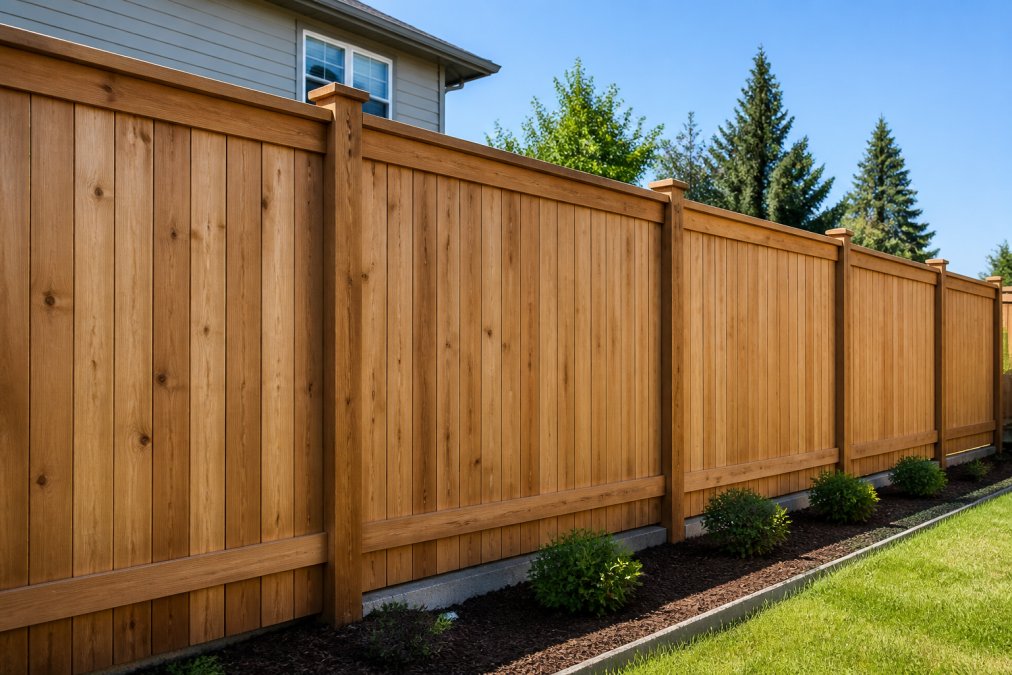
 ultimate-guide
Wood Privacy Fences: A Complete 2026 Guide
Table of Contents
- Why Wood Privacy Fences Matter for Your Home
- Cedar vs Pressure Treated Fence: Which Material Works Best?
- Popular Wood Privacy Fence Styles and Designs
- Wood Fence Installation Cost: What to Budget
- Privacy Fence Maintenance Tips for Long-Term Durability
- Preventing Wood Rot and Structural Damage
- DIY vs. Professional Fence Installation
- Frequently Asked Questions
Last Updated: September 14, 2026
Why Wood Privacy Fences Matter for Your Home
Wood privacy fences can provide privacy, create a more usable outdoor living space, and add natural character to a property. Compared with chain-link fencing, wood provides substantially more visual screening. It also offers greater flexibility in height, board layout, stain color, and architectural style than many prefabricated fencing systems.
In the Pacific Northwest, however, a fence’s performance depends on more than its appearance. Lumber quality, post installation, drainage, hardware, exposure, and ongoing maintenance all affect how well it withstands moisture, seasonal movement, wind, and organic growth.
At Apex Contracting, we help homeowners choose, install, repair, and maintain wood fencing that complements the property while accounting for the conditions found throughout Oregon and Southwest Washington.
Cedar vs Pressure Treated Fence: Which Material Works Best?
Choosing between cedar and pressure-treated lumber is one of the most important decisions when planning a wood privacy fence. Both materials can perform well in the Pacific Northwest, but they differ in appearance, cost, stability, and resistance to decay.
Cedar: Natural Beauty and Stability
Cedar is valued for its natural color, visible grain, and resistance to decay and insects. It is also relatively lightweight and dimensionally stable, meaning quality cedar boards are generally less prone to excessive shrinking and twisting than freshly treated lumber.
When left unfinished, cedar gradually weathers to a silvery-gray color. Applying a penetrating, pigmented stain can preserve its warmer color while helping protect it from moisture absorption and UV exposure.
Cedar typically costs more than pressure-treated lumber, and its durability varies by species, grade, and the amount of decay-resistant heartwood in each board. Even naturally resistant cedar benefits from proper installation, good drainage, and periodic maintenance.
Pressure-Treated Lumber: Affordability and Decay Resistance
Pressure-treated lumber is infused with preservatives that protect it against fungal decay and wood-destroying insects. Most pressure-treated lumber currently sold for residential fencing uses copper-based preservative systems. Chromated copper arsenate, or CCA, has not been used for most residential consumer applications since 2003 (EPA).
Pressure-treated lumber generally costs less than cedar and is commonly used for structural components and posts, particularly when the lumber is rated for ground contact. However, treated boards may shrink, check, cup, or twist as they dry, making careful material selection and installation important.
Pressure treatment protects against biological decay, but it does not prevent graying, surface checking, or UV weathering. Once the lumber has dried sufficiently, it can be stained to improve its appearance and reduce moisture-related movement.
Popular Wood Privacy Fence Styles and Designs
Wood privacy fences are available in several styles, each offering a different balance of privacy, airflow, appearance, and structural support. The best design depends on the home’s architecture, the level of screening desired, and the property’s exposure to wind and weather.
Board-on-Board, Shadowbox, and Tongue-and-Groove Designs
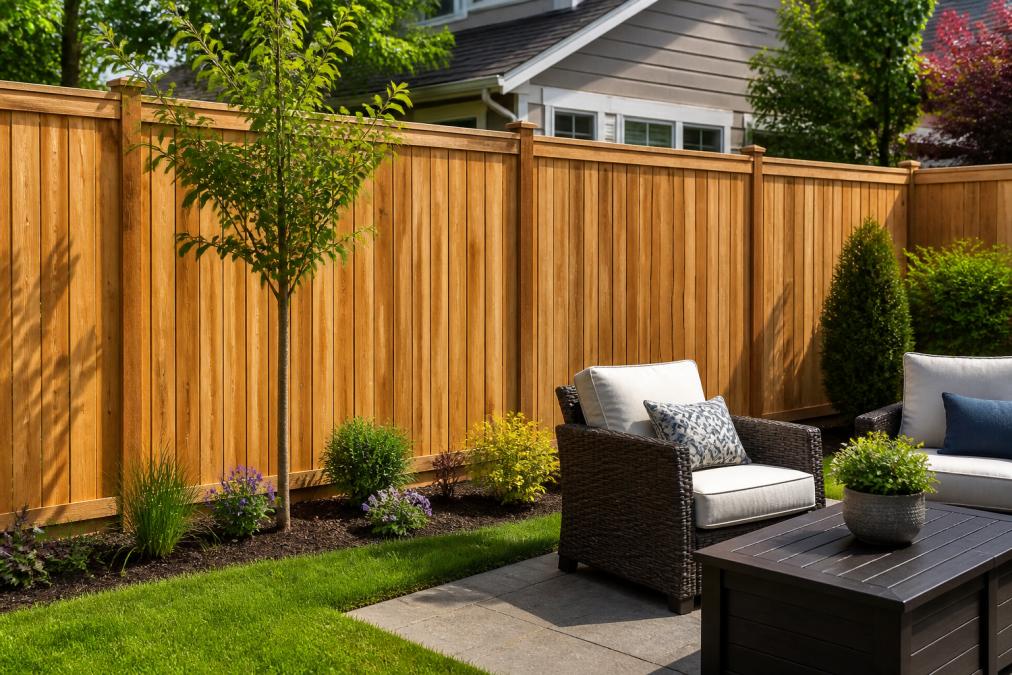
Board-on-board fencing uses overlapping vertical boards to minimize gaps as the wood naturally expands and contracts. It provides excellent privacy but acts much like a solid surface in high winds, making proper post spacing, footing depth, and structural framing especially important.
Shadowbox fencing places alternating boards on opposite sides of the rails. This creates privacy when viewed straight on while allowing more airflow than a fully overlapping board-on-board design.
Tongue-and-groove fencing uses interlocking board edges to create a clean, nearly seamless appearance. Because wood naturally moves with changes in moisture, these systems must be installed with appropriate clearances and maintained carefully to reduce the risk of buckling, separation, or trapped moisture.
Traditional Vertical and Horizontal Fencing
Traditional vertical privacy fencing uses closely spaced pickets or boards supported by horizontal rails. It is one of the most common residential choices because it is versatile, cost-effective, relatively easy to repair, and well suited to many home styles.
Horizontal fencing creates clean, modern lines that complement contemporary architecture. However, long horizontal boards require properly spaced posts and adequate support to reduce sagging, bowing, and warping. Material selection is especially important because movement or uneven boards are more noticeable in a horizontal layout.
Wood Fence Installation Cost: What to Budget
The cost of a wood privacy fence depends on its length, height, lumber, design, post system, gates, access, terrain, and whether an existing fence must be removed. Looking beyond the lowest initial price is important because the quality of the posts, framing, fasteners, and installation will strongly influence future repair costs.
Upfront Material and Installation Costs
As a general 2026 planning range, professionally installed six-foot wood privacy fencing in Oregon and Southwest Washington may cost approximately $30–$65 or more per linear foot. A straightforward 100-foot fence might therefore cost about $3,000–$6,500, while premium cedar, horizontal layouts, decorative details, steel posts, difficult access, gates, demolition, or extensive site preparation can increase the total considerably.
Higher-grade cedar generally offers better appearance, fewer defects, and improved dimensional stability. More economical grades may contain additional knots and variation but can still perform well when boards are selected carefully and installed correctly.
Post construction is one of the most important cost and durability considerations. Pressure-treated posts are economical, while galvanized steel posts cost more but eliminate the risk of the posts themselves rotting. Post spacing, footing dimensions, and drainage should be selected for the fence height, design, soil conditions, and wind exposure rather than applied as a single rule to every property.
Corrosion-resistant fasteners and hardware are also important, particularly with cedar and pressure-treated lumber. Hot-dip galvanized and stainless-steel components generally cost more than basic hardware but help prevent premature corrosion, staining, and connection failure.
Before excavation begins, underground utilities must be located. The fence line should also be confirmed using available property records, survey markers, or a professional survey when the boundary is uncertain or disputed. Local height restrictions, setbacks, permits, easements, and HOA requirements should be reviewed before construction.
Long-Term Maintenance Cost Analysis: 10-Year and 20-Year Projections
Maintenance costs can eventually exceed the original installation price when a fence is professionally cleaned and restained throughout its service life. The following example uses a 100-foot fence and today’s estimated costs. Actual expenses will vary with fence height, access, condition, stain type, preparation requirements, and future labor and material prices.
Cedar Fences: Professional cleaning and staining may cost approximately $1,200–$2,000 per application. If the fence is refinished every two to three years, it could receive approximately seven to ten applications during a 20-year period, including its initial finish. Combined with an estimated installation cost of $3,500–$6,000, the illustrative 20-year cost could total approximately $12,000–$26,000.
Pressure-Treated Fences: Pressure-treated fencing generally has a lower initial cost, approximately $2,200–$4,000 for a straightforward 100-foot installation. If it is professionally cleaned and stained on the same schedule, its illustrative 20-year cost could total approximately $10,500–$24,000.
Natural Weathering Without Stain: Cedar and pressure-treated fencing can be left unstained, eliminating recurring refinishing expenses. The wood will gradually turn gray and may develop checking, warping, or uneven weathering. Repairs may eventually be necessary, but their timing and cost depend heavily on lumber quality, post construction, drainage, exposure, and installation quality. Leaving a fence unstained lowers scheduled maintenance costs but does not guarantee the lowest overall ownership cost.
These estimates are presented in today’s dollars and do not include inflation, financing, major storm damage, or complete fence replacement.
Request a Fence Consultation →
Factors That Increase Maintenance Costs
Wood fences require more frequent cleaning, repair, or refinishing when conditions prevent the lumber from drying properly. Heavy shade, dense vegetation, poor airflow, sprinkler overspray, and soil or mulch piled against the boards can encourage algae growth, discoloration, and decay.
Drainage is especially important in the Pacific Northwest. Standing water and saturated soil around wood posts can shorten their service life, while poorly drained concrete footings may hold moisture against the wood. Properties exposed to coastal air may also require more corrosion-resistant hardware and closer monitoring of metal connections.
Sun exposure creates a different type of wear. South- and west-facing fence sections often fade and dry faster than shaded sections, causing uneven color, checking, or earlier coating failure. As a result, different sides of the same fence may not require maintenance at the same time.
Construction quality also affects long-term cost. Inadequate post support, improper spacing, weak gate framing, unsuitable fasteners, and boards installed without accounting for natural wood movement can lead to leaning, sagging, corrosion, or premature repairs.
Privacy Fence Maintenance Tips for Long-Term Durability
Wood fence maintenance should begin with routine observation rather than waiting for obvious failure. An annual inspection can identify loose boards, leaning posts, failed fasteners, coating wear, vegetation contact, and drainage problems before they become expensive repairs.
Cleaning and refinishing should be based on the fence’s condition, exposure, wood type, and the coating manufacturer’s instructions. Not every fence—or every side of the same fence—will need work on an identical schedule.
Maintenance for Pacific Northwest Conditions
Shaded and High-Moisture Areas: Fences surrounded by trees, dense landscaping, or poor airflow often remain damp longer and may develop algae, mildew, or localized decay. Inspect these areas closely, keep vegetation from resting against the boards, correct sprinkler overspray, and clean organic growth before it becomes established.
Sunny and Exposed Areas: South- and west-facing sections receive more UV exposure and may fade, dry, or lose their protective finish sooner. A pigmented exterior wood stain generally provides better UV protection than a clear water repellent while still allowing the wood grain to remain visible.
Coastal Areas: Salt exposure can accelerate corrosion at fasteners, brackets, hinges, and gate hardware. Stainless steel or appropriately rated hot-dip galvanized hardware may provide better performance, depending on the material and level of exposure. Salt and debris should be removed using a wood-safe cleaning method when buildup becomes visible.
Cold or Elevated Areas: Properties that experience repeated freezing, snow accumulation, or significant soil movement should be checked after winter for loose posts, cracked boards, and shifted gates. Coatings should only be applied when the wood moisture level, air temperature, and weather forecast meet the product manufacturer’s requirements.
Avoid aggressive or unnecessary pressure washing. Excessive pressure, a narrow spray tip, or working too close to the surface can raise the grain and permanently damage softer woods such as cedar. Use the lowest effective pressure—or a suitable wood cleaner with gentle rinsing—and allow the fence to dry fully before applying a finish.
Staining, Sealing, and Weather Protection
A new wood fence should be stained once the lumber is sufficiently dry—not automatically after a fixed number of months. Cedar may be ready relatively soon after installation, while pressure-treated lumber often needs additional drying time. A moisture meter and the stain manufacturer’s requirements provide a more reliable guide than the fence’s age alone.
Different finishes provide different levels of protection:
- Clear water repellents preserve the natural appearance but provide limited protection from UV-related fading.
- Semi-transparent stains add pigment for improved UV protection while allowing the wood grain to remain visible.
- Solid-color stains provide greater color coverage and UV protection but conceal more of the natural grain and may require additional preparation when recoated.
Many exterior stains already contain water-repellent properties, so applying a separate sealer is not always necessary or compatible. Products should be selected and applied as a complete system according to the manufacturer’s instructions.
Before refinishing, clean the fence using a wood-safe method, repair damaged or loose components, and remove any failing coating that would prevent proper adhesion or penetration. Allow the wood to dry to the moisture level required by the selected product, and apply the finish only when temperature, humidity, and the weather forecast are within the manufacturer’s specifications.
A two- to four-year refinishing interval is a reasonable planning estimate for many fences, but it is not a universal rule. Transparent finishes, heavy sun, persistent shade, and high moisture exposure may require more frequent attention, while some higher-pigment coatings may last longer. Inspect the fence annually and refinish when the coating shows significant fading, loss of water resistance, peeling, or uneven wear.
Preventing Wood Rot and Structural Damage
Wood rot develops when susceptible lumber remains damp long enough for decay fungi to grow. Prevention therefore begins with drainage, airflow, and keeping unnecessary moisture away from the fence.
Avoid piling soil, mulch, leaves, or other debris against the bottom boards. Trim vegetation that rests against the fence, redirect sprinkler overspray, and correct drainage conditions that leave standing water around the posts. Wood components not rated for ground contact should remain separated from the soil.
Inspect the fence at least annually, paying particular attention to post bases, rail connections, board ends, and shaded areas. Warning signs include persistent softness, crumbling fibers, fungal growth, deep cracks, loose connections, or posts that move independently of the surrounding fence. A screwdriver or awl can be used gently on a suspected area; easy penetration under light pressure may indicate decay beneath the surface.
Rot cannot be reversed with stain or surface sealant. If a component has lost structural strength, the affected wood should be replaced and the moisture source corrected. Acting early may limit the repair to individual boards, rails, or posts instead of allowing movement to damage an entire fence section.
Fasteners, brackets, hinges, and gate hardware should also be checked for corrosion or loosening. Replace incompatible or heavily corroded hardware and secure loose components promptly. Sagging gates should be corrected before their weight begins pulling posts or adjacent panels out of alignment.
DIY vs. Professional Fence Installation
Installing a wood privacy fence yourself can reduce labor costs, but it requires more than basic carpentry. Accurate layout, utility locating, property-line verification, post-hole excavation, concrete work, gate framing, and consistent alignment all affect the finished result.
Posts and gates are especially unforgiving. Small layout or leveling errors can become increasingly visible across a long fence run, while inadequate post support may lead to leaning panels or gates that no longer close properly. DIY installation also requires accounting for tool rentals, material delivery, excavation, disposal, and the time required to correct unexpected site conditions.
A straightforward fence on level, accessible ground may be manageable for an experienced homeowner. Professional installation is generally more appropriate for long fence runs, sloped or rocky properties, limited-access areas, heavy gates, horizontal designs, uncertain boundaries, or locations with significant wind exposure.
Before beginning any installation, arrange for underground utility locating and review applicable city, county, easement, and HOA requirements.
Frequently Asked Questions
What wood is best for a privacy fence?
Cedar and pressure-treated lumber are the top choices for wood privacy fences. Cedar offers natural rot resistance and attractive appearance but costs more. Pressure-treated lumber is more affordable and lasts longer due to chemical treatment, making it ideal for most homeowners. Your choice depends on budget, climate, and desired aesthetics. Both require regular staining and sealing to maximize durability.
How much does wood fence installation cost?
Wood fence installation costs depend on lumber grade, fence height, total linear footage, site conditions, and labor rates. Material costs vary significantly based on whether you choose cedar or pressure-treated lumber and the fence style. Professional installation labor adds substantial expense. For accurate pricing tailored to your specific project, contact a licensed contractor for a detailed quote based on your property's measurements and soil conditions.
How long does a wood privacy fence typically last?
A well-maintained wood privacy fence lasts 15-20 years or longer. Pressure-treated lumber often outlasts cedar due to its chemical rot resistance, while cedar requires more frequent maintenance but develops character over time. Lifespan depends heavily on climate, maintenance frequency, wood quality, and concrete footings. Regular staining, sealing, and inspections for wood rot can extend durability significantly.
What are the best privacy fence maintenance tips?
Stain and seal your fence every 2-3 years to protect against weathering and wood rot. Inspect posts and panels annually for damage, soft spots, or insect damage. Clear vegetation away from the fence base to improve airflow and prevent moisture buildup. Check fence hardware for rust and tighten loose bolts. Address any rotting wood immediately to prevent structural failure. In regions with harsh winters, ensure proper drainage around fence posts.